Understanding Passive vs Active Fire Protection Systems in Hyderabad for Commercial Safety
Building a successful enterprise requires immense planning, investment, and strategic execution. However, protecting that hard earned asset from unforeseen disasters is where true business resilience lies. For startup founders, property developers, and business owners navigating a rapidly expanding urban landscape, understanding the core dynamics of passive vs active fire protection systems in Hyderabad is absolutely critical. Fire hazards pose a constant threat to commercial infrastructure, and relying on basic precautions is no longer sufficient. You need a comprehensive, multi layered strategy to safeguard your human capital and physical infrastructure.
Many business owners assume that installing a few smoke detectors is enough to meet safety standards. This misconception can lead to devastating consequences during a real emergency. A robust safety infrastructure requires a harmonious blend of systems that actively fight flames and structural elements that contain the spread of smoke. In this comprehensive guide, we will break down the fundamental differences between these two protection categories, explore real world applications, and outline exactly how to ensure your commercial space remains compliant and secure.
What is Active Fire Protection?
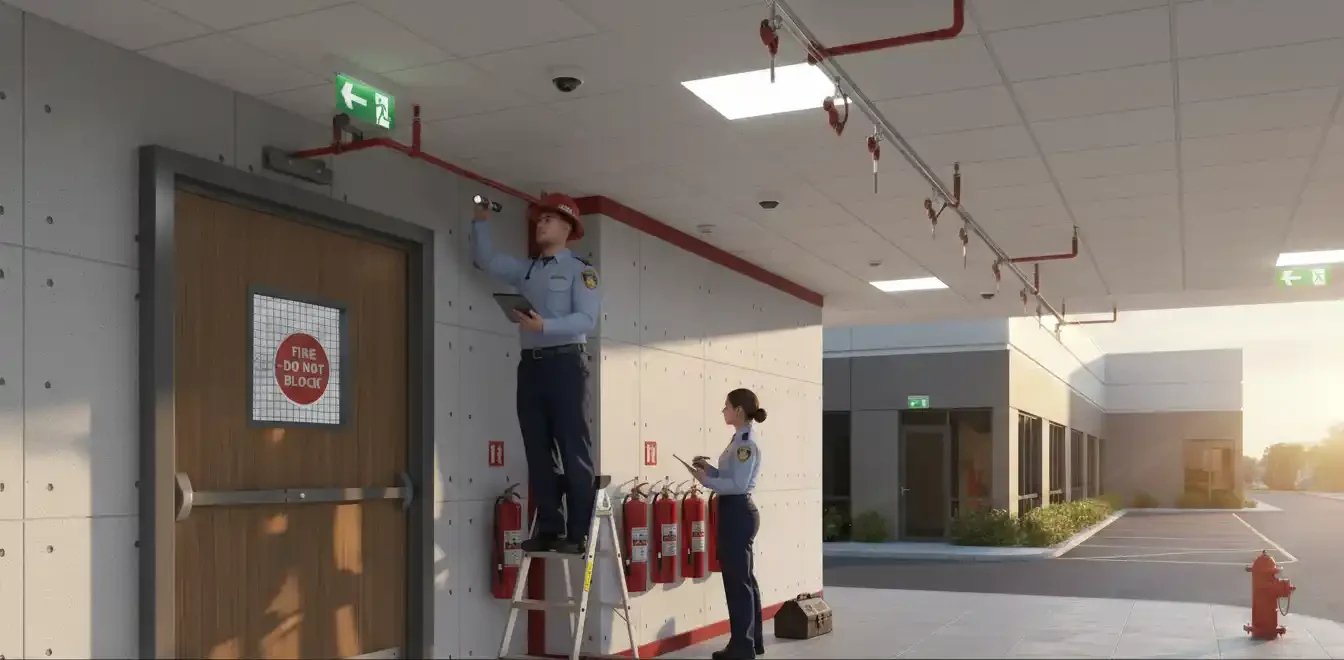
Active fire protection refers to systems and equipment that require a certain amount of action or motion to work efficiently in the event of an emergency. These systems are designed to detect a fire, alert the building occupants, and physically combat the flames to suppress or extinguish them completely. Without these systems, a minor spark could quickly escalate into an uncontrollable inferno.
For modern commercial complexes located in high density areas like Hitech City and Gachibowli, active systems serve as the critical frontline defense. When a fire breaks out, these automated and manual tools jump into action to minimize damage and save lives.
Core Components of Active Systems
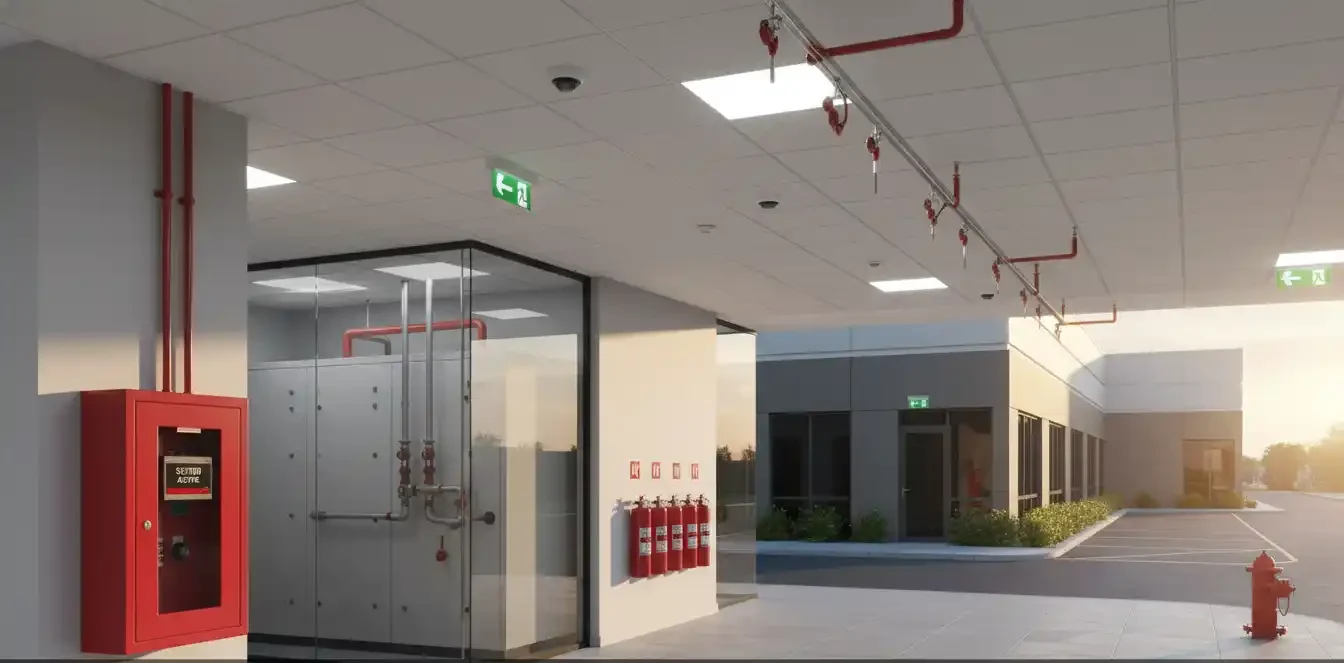
- Detection and Alarm Systems: Smoke detectors, heat sensors, and manual pull stations that trigger audible and visual alarms.
- Water Based Suppression: Automatic sprinkler networks designed to activate when ambient temperatures reach a specific threshold.
- Manual Suppression Tools: Strategically placed fire extinguishers and standpipe systems that allow staff or emergency responders to fight localized fires.
- Special Hazard Systems: Clean agent systems used in server rooms or data centers where water would cause catastrophic damage to electronic equipment.
Implementing these systems requires technical precision. Partnering with the best active fire protection services in Hyderabad ensures that your detection and suppression mechanisms are calibrated correctly and maintained up to international safety standards, such as those outlined by the National Fire Protection Association (NFPA).
What is Passive Fire Protection?
While active systems take immediate action to fight the fire, passive systems are stationary and built directly into the architectural structure of the building. The primary goal of a passive system is to contain the fire at its point of origin, preventing flames and toxic smoke from spreading rapidly from one room or floor to another. This containment strategy is vital for providing occupants with enough time to evacuate safely.
If you manage a large retail outlet in Dilsukhnagar or an industrial facility in Kukatpally, you must rely on the structural integrity of your building to prevent a localized fire from consuming the entire property. This is achieved through careful engineering and the use of specialized, fire resistant materials.
Essential Elements of Passive Fire Protection
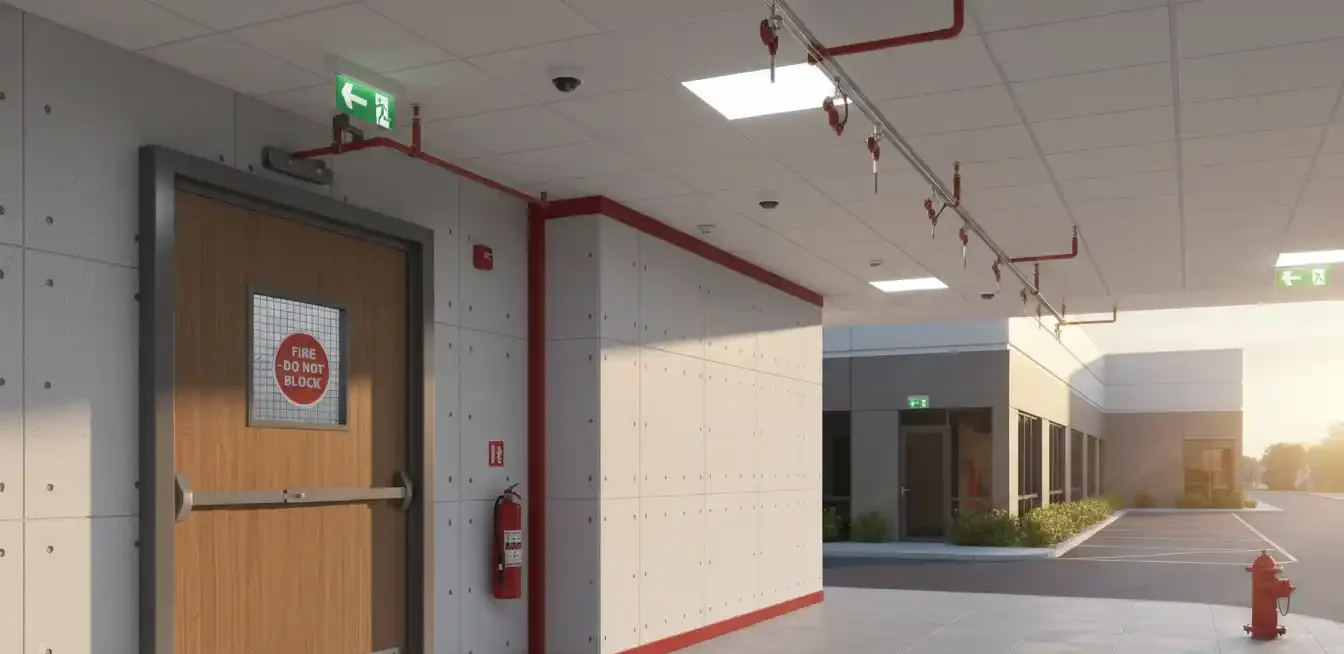
- Fire Compartmentalization: Designing spaces with fire rated walls, floors, and ceilings that restrict the movement of a fire for a designated time period.
- Fire Doors and Windows: Specially manufactured entryways that automatically close during an emergency to seal off sections of the building.
- Firestopping Materials: Intumescent sealants and caulks used to fill gaps around pipes, electrical wires, and ductwork that penetrate fire rated walls.
- Structural Fire Protection: Applying fire retardant coatings or protective cladding to structural steel columns to prevent them from buckling under extreme heat.
For extensive commercial developments, investing in reliable passive fire safety solutions in Telangana is a non negotiable aspect of the construction phase. These hidden structural safeguards are the silent heroes during a catastrophic event.
Key Differences: The Active and Passive Synergy
To fully grasp the architecture of commercial safety, it is helpful to look at how these two distinct categories interact. They do not operate in isolation. Rather, they form a symbiotic relationship that ensures maximum security.
Active systems are reactive. They identify a hazard and attempt to neutralize it. In contrast, passive systems are preventive. They are always in place, requiring no human intervention or automated triggers to perform their function. Consider a scenario in a busy corporate office. A small electrical fire starts in a storage closet. The passive fire rated walls keep the fire trapped inside the closet, preventing it from spreading to the main office floor. Meanwhile, the active smoke detector senses the hazard, sounds the alarm to evacuate the building, and triggers the sprinkler head inside the closet to extinguish the flames.
Industry data indicates that commercial buildings equipped with both systems experience significantly lower property damage and near zero fatality rates compared to structures lacking comprehensive protection. This dual approach is heavily emphasized by global safety organizations like FEMA when outlining commercial infrastructure guidelines.
Navigating Building Safety Regulations
Securing a commercial property is not merely a matter of common sense. It is a strict legal requirement. The local municipal and fire department authorities mandate very specific safety protocols before a business is allowed to open its doors to the public. Failing to meet these standards can result in severe financial penalties, operational shutdowns, and massive legal liability in the event of an accident.
Understanding the bureaucratic requirements is often challenging for startup founders. Acquiring the necessary fire and safety permissions for buildings in Hyderabad involves multiple inspections to verify that both your structural containment measures and your active suppression systems meet the local building codes. Your fire & safety Services provider should guide you through this complex documentation process, ensuring that every blueprint and installation is fully compliant from day one.
Regular audits are also mandatory. You cannot simply install these systems and forget about them. Routine maintenance, testing, and certification renewals are required to keep your operational licenses valid.
Practical Implementation Tips for Local Businesses
Whether you are upgrading an older building or moving into a newly constructed complex, taking a systematic approach to fire safety is crucial. Here are practical steps to ensure your enterprise remains protected.
- Conduct a Professional Risk Assessment: Hire a certified engineer to evaluate your specific industry risks. A chemical laboratory will require vastly different safety mechanisms compared to a standard software development office.
- Invest in Quality Extinguishers: Ensure you have the correct type of extinguishers placed at accessible intervals. Engaging with specialized commercial fire extinguisher services in LB Nagar guarantees that your equipment is routinely pressurized and suitable for the specific hazards present in your workspace.
- Train Your Employees: The best equipment in the world is useless if your staff does not know how to use it. Conduct regular evacuation drills and hands on training sessions for operating manual suppression tools.
- Maintain Clear Evacuation Routes: Never block fire doors or emergency exits with inventory or office furniture. Passive systems can only save lives if people can freely navigate the escape routes.
- Schedule Annual Inspections: Maintain a strict calendar for servicing your alarms, checking sprinkler water pressure, and inspecting fire door hinges. Regular maintenance provided by professional Fire Extinguishers Services companies ensures everything works flawlessly when it matters most.
Frequently Asked Questions
Can a building rely only on active fire protection without passive systems?
How often should commercial fire protection systems be inspected?
What is an intumescent coating?
Are regular fire drills legally required for commercial spaces?
How do I apply for official safety clearance for my new office?
Conclusion
Protecting a commercial enterprise from the devastating impact of a fire is a complex but necessary undertaking. By understanding the distinct yet complementary roles of active suppression tools and passive structural barriers, business owners can create a resilient environment that prioritizes human safety and asset protection. Ignoring these requirements not only puts lives at risk but also invites severe legal complications. Take the time to audit your current safety infrastructure, partner with certified local experts, and ensure your building is fully equipped to handle any emergency scenario.
Secure Your Business Infrastructure Today
Do not leave your commercial safety to chance. Divagni specializes in end to end fire protection strategies, compliance audits, and system installations. Contact our local experts to guarantee your property meets all regulatory standards and is fully protected against unexpected hazards.
- 🏢 Company: Divagni
- 📍 Location: LB Nagar, Hyderabad (Serving all of Hyderabad & Telangana)
- 📞 Phone: +91 98853 43437
- ✉️ Email: info@divagni.in